

Questions About Ear Wax Removal
-
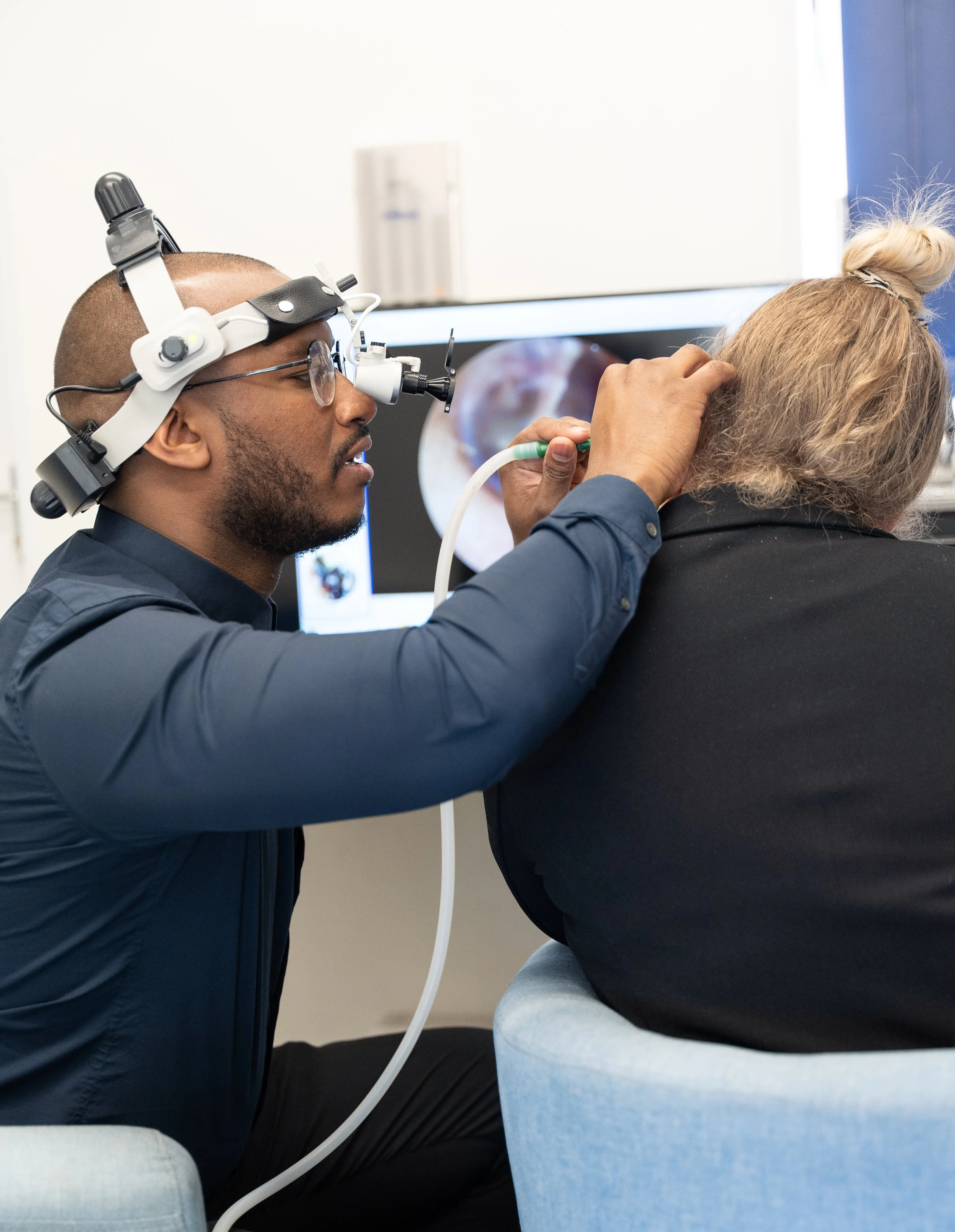
Can wax removal be painful?
Due to our Audiologists delicate nature and years of experience many clients have commented on his ability to help them feel at ease during the process.
At any time of discomfort or pain we always ask that you say immediately or raise your hand as a sign to stop.
Micro-suction is far less evasive than other methods such as ear syringing, however there is always a risk of discomfort or pain during the procedure.
-

Is there a call out fee for a home visit appointment?
For home visits specifically, If there is no wax present upon examination in the ear(s) we do charge a £25 call out fee, which helps cover our travel expenses, time and equipment used to check the ears.
We do not charge for a recall where required unless deemed to be without justified reason.
-
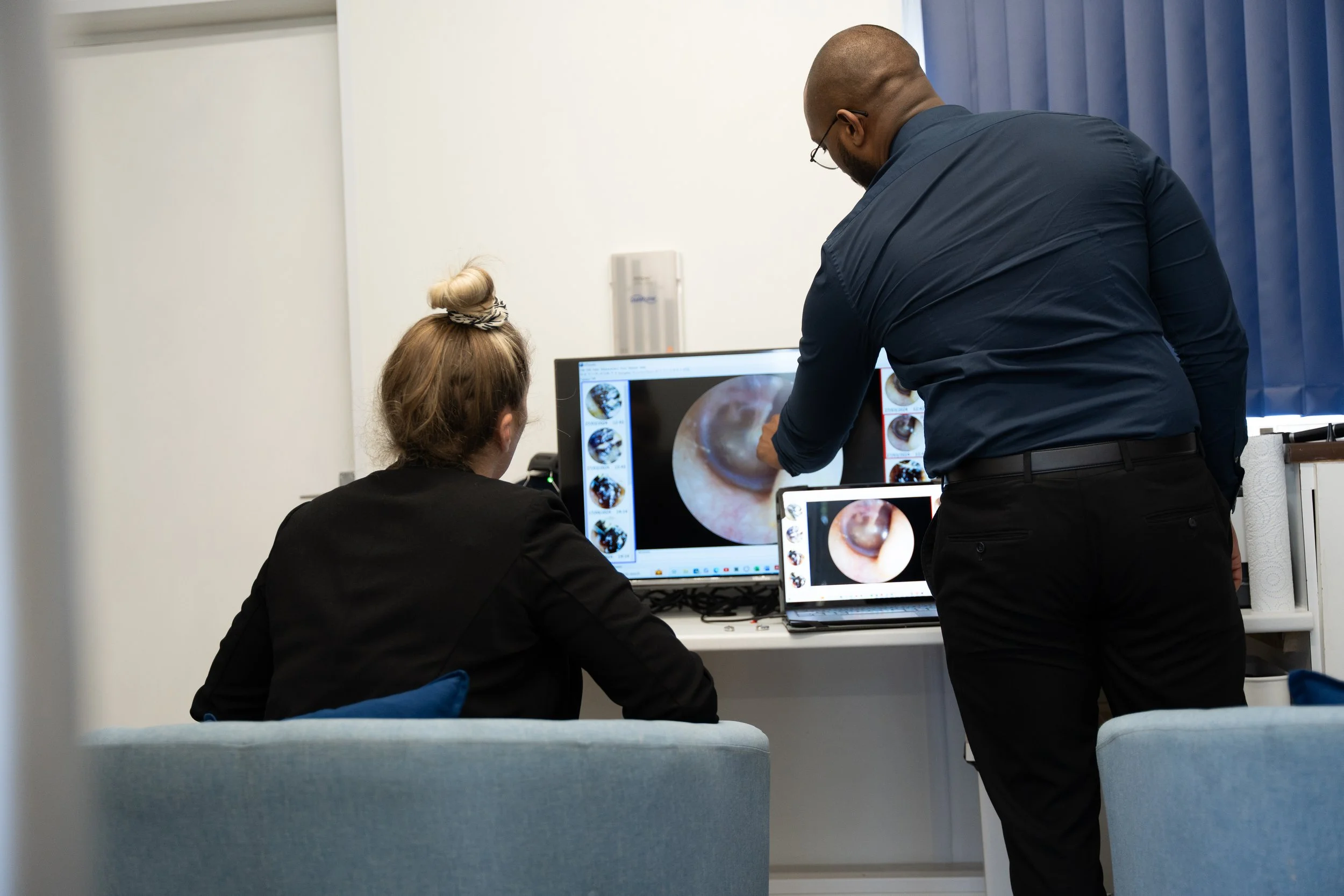
What else can I expect during the ear wax removal procedure?
The procedure can take anywhere between 1-15 minutes per ear.
We explain step by step how to best feel comfortable during the procedure and will consistently check to see how you feel, during and after the process.
There is a possibility that not all wax will be completely removed from the ear in the first session.
This can be due to the texture of wax, narrowness of an ear canal, position of where the wax is located (deep in the ear canal) and in some cases the clients ability to not remain comfortable during the wax removal.
Throughout the consultation(s) we ensure to keep to best practice, informing and protecting our clients.
-
How often will I need my ears to be checked for wax build-up?
Wax build-up depends on a number of factors. Experience has taught that after wax removal, the earliest wax can build up tends to be after a 3 month period.
With regular build up, we recommend ideally having your ears checked for wax at least once a year to avoid a complete ear wax blockage.
Frequently Asked Questions About Hearing Tests & Hearing Aids
-
The benefits of an in-person clinic appointment for a hearing test versus an online hearing test include the accuracy and calibration of the equipment used.
In a clinic setting, the headphones, equipment, and test room are calibrated to ensure accurate decibel levels, which is important for programming hearing aids effectively. This accuracy can potentially lead to better hearing aid programming for specific frequencies, ultimately improving hearing in different environments.
In contrast, an online hearing test using headphones at home may only provide a rough estimate of hearing loss and lacks the precision and calibration of in-person testing.
-
The average person will wait up to nine months before they receive hearing aids for free through the NHS. Sometimes that can go up to a year.
The average waiting time for a hearing test with the NHS can take anywhere between, four to six weeks – sometimes up to a few months at the very least.
Whereas if you were to use a private hearing clinic, especially with Feel Clear Hearing, all clients are seen within a week. Even when it comes to ordering hearing aids privately, it takes a few days for the hearing aids to arrive. Sometimes we have them in stock for same day delivery.
If it's custom made hearing aids, that can take up to about two and a half weeks, but usually it's around a two week turnaround.
-
In a hearing test, the audiologist asks open questions to get to know the person's hearing health and lifestyle choices. They also ask clinical questions to ensure nothing is missed and to identify any referral conditions related to ear health or other detectable conditions.
During the test, the person is presented with a series of beeps and whistles at different frequencies through headphones and is required to press a button whenever they hear a sound.
Additionally, a bone conduction test is performed directly to their inner ear, along with speech tests to assess how well they hear individual words, especially in background noise.
-
The cost of a private hearing test can vary.
The average basic hearing check typically costs between £25 to £50, while more advanced tests can range from £30 to £150.
Currently, our full hearing consultation is provided at £50, which is waived upon the purchase of hearing aids.
Our Basic Hearing Checks which include an ear examination costs just £30
-
No, you do not need a referral from your GP for a hearing test.
Some GPs may not refer to the NHS unless the individual has undergone a private hearing screening to check for hearing loss.
Referrals can cost the GP, so they may prefer not to refer someone to the NHS for a hearing test unless it's confirmed that there are hearing problems.
-
Someone with mild hearing loss may consider using hearing aids as long as two or more frequencies are below 25 decibels, typically around 30 to 35 decibels.
However, most people who have hearing loss beyond 35 to 40 decibels notice a difference with hearing aids.
-
The average cost of a hearing aid can vary widely, with prices ranging from as low as £200 online to as high as £6000 on the high street.
Currently, our starting price per hearing aid is £800 which includes lifetime aftercare. We have found that hearing aids available cheaper than this price seem ineffective for most hearing loss clients.
-
The average consumer of private hearing aids typically upgrade every three to five years.
That goes in line with the warranty standard for more premium and midrange hearing aids as this tends to be around a four to five-year warranty period.
Hearing aids can last as long as ten to 15 years.
It depends on the budget of the client and how they feel, and of course, the verified checks to see how the hearing aid is performing.